

With the increasingly satisfying material life of people, more and more domestic waste is generated around us, and there are various types. Although this shows that our living standards are getting higher and higher, the impact of garbage itself on our lives is also increasing. The bigger it is, then how to better deal with domestic waste has become an urgent problem to be solved. Domestic waste classification is one of the effective methods.
Garbage classification is the premise of scientific treatment of garbage and the basis of waste reduction, recycling and harmless treatment. In response to the increasing amount of garbage production and environmental degradation, how to maximize the use of garbage resources, reduce the amount of garbage disposal, and improve the quality of living environment through garbage classification management is one of the urgent issues that countries are concerned about.
Garbage classification refers to the separation of several different categories according to the impact of the components of the garbage on the environment, the use value and the requirements of the existing treatment methods.
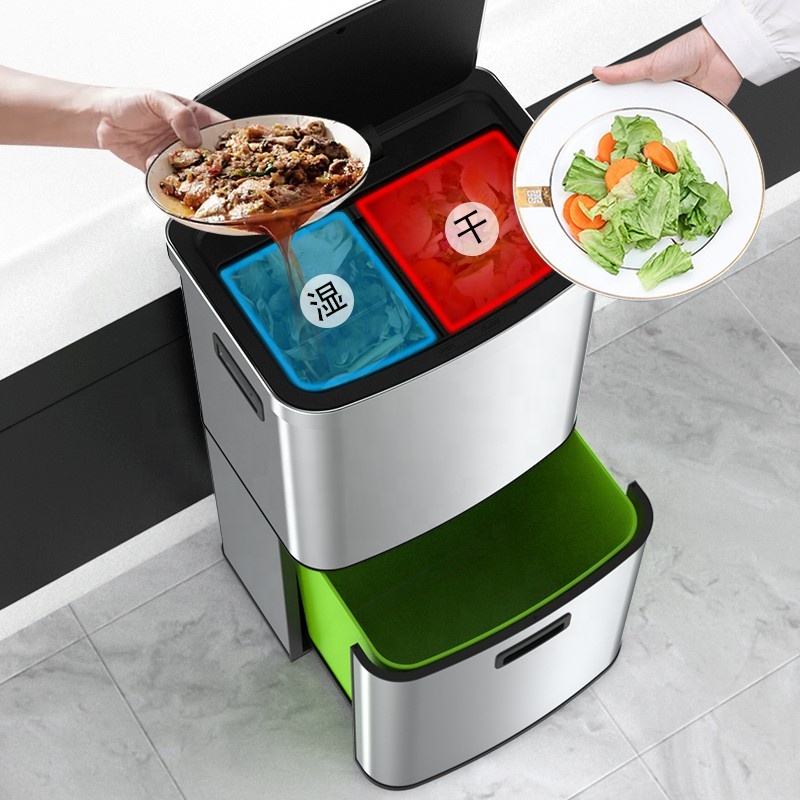
The role of waste classification:
1. Separation of food waste mainly composed of perishable organic components, providing high-quality raw materials for waste composting, and producing high-quality organic fertilizers, which is conducive to improving soil fertility and reducing the amount of fertilizer application. 2. The classification of hazardous waste reduces the content of heavy metal organic pollutants and pathogenic bacteria in the waste, which is conducive to the harmless treatment of waste and reduces the risk of water, soil and air pollution in waste disposal. 3. Increase the proportion of waste recycling, reduce the demand for raw materials, and reduce carbon dioxide emissions. 4. Popularize the knowledge of environmental protection and garbage, improve the whole society's understanding of the sanitation industry, reduce the difficulty of sanitation workers' work, and form an atmosphere of respect and care for sanitation workers. Through these functions, we can roughly divide domestic waste into four categories: recyclable waste, kitchen waste, hazardous waste, and other waste. The corresponding four-color collection containers are blue, gray, red, and orange respectively.
The significance of garbage classification:
1. Garbage classification reduces the mutual pollution between different garbage and is conducive to the recycling of materials. 2. Garbage classification is conducive to the separation of ecological garbage and non-ecological garbage, reducing the difficulty of garbage disposal. 3. Separation of harmful garbage, reducing the content of heavy metal pathogenic bacteria in garbage, and reducing the risk of secondary pollution of water, air, and soil. 4. Garbage classification is beneficial to reduce the final disposal amount of garbage. 5. Garbage classification is conducive to improving the level of social civilization.